
Overview and benefits tailored to the 10 slot 3 ml case
Updated on: 2026-05-22
Table of Contents
- 10-Slot 3 ml Vial Case Overview and Benefits
- Use Cases: sample Storage, Vials, and Research
- Compact Vial Organizer vs. Standard Vial Carrying Case
- Common Mistakes When Selecting a 3 ml Vial Case
- Buyer's Checklist for the Right 3 ml Vial Case
- How to Clean and Sterilize a 3 ml Vial Case
- Quick Cleaning Steps
- Deep Sterilization Considerations
- FAQ: 3 ml Vial Case Sizing, Cleaning, and Field Use
- Wrap-Up: Choosing a 3 ml Vial Case That Protects Your Work
10-Slot 3 ml Vial Case Overview and Benefits
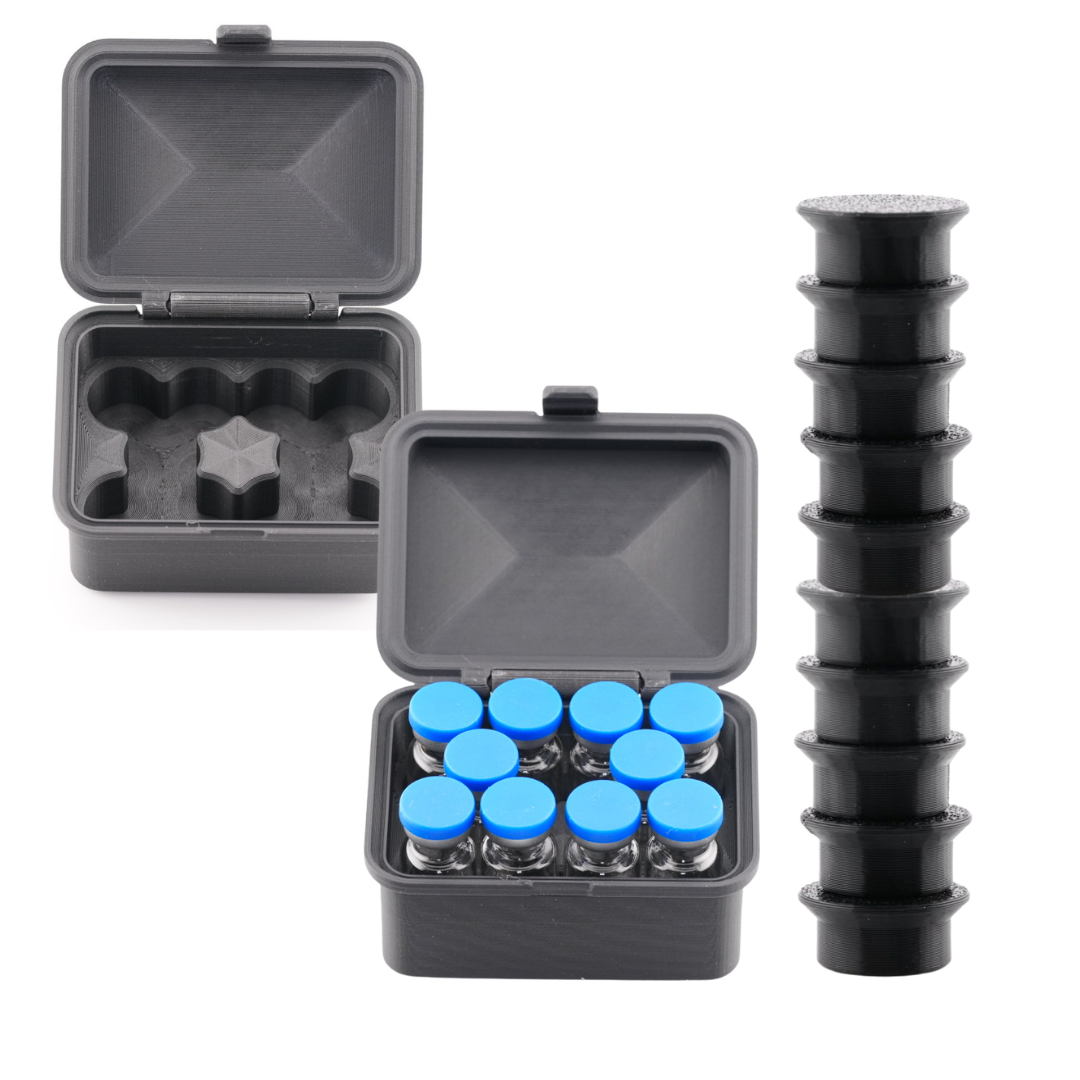
A 10-slot 3 ml vial case is more than a container—it is an insurance policy for your sample medications, vial samples, and research vials. The right case keeps vials upright, cushioned, and clearly organized so you can move them from benchtop to freezer to field without spills or mix-ups. Whether you need a compact organizer for sample storage or a discreet travel-friendly case for vials, your goal is the same: protect sample integrity and improve efficiency. If you're ready to outfit your team, compare options and shop cases that match your workflow.
Investing in a quality 10-slot 3 ml vial case reduces glass breakage, prevents label abrasion, and standardizes how you handle samples. The protective hard-shell body with secure latch ensures your vials stay safe during transport, while precision compartments minimize rattling and keep items secure. This compact organizer is ideal for wellness vials, essential oils, research samples, and sample medications. Models range from compact 10-slot organizers to larger cases built for extended travel. This guide will help you choose with confidence.
Use Cases: sample Storage, Vials, and Research
For sample medication storage, a 10-slot 3 ml vial case keeps your weekly or monthly supply organized and protected. The discreet, compact design makes it perfect for travel kits, while the secure latch prevents accidental opening. The hard-shell body protects against impacts that could damage vials or compromise medication integrity.
For vial research, a compact organizer for vials shields against moisture, dust, and impact. Research teams use these for storing vial samples, while wellness enthusiasts carry essential oils and supplements. The precision compartments prevent micro-collisions that loosen caps or crack glass, making it ideal for both laboratory and personal use.
Compact Vial Organizer vs. Standard Vial Carrying Case
Choose a 10-slot 3 ml vial case when you need compact storage, travel-friendly design, and discreet protection for small collections. This organizer fits easily in bags, purses, or travel kits; it's ideal for sample medications, vials, and personal wellness vials.
Choose a larger vial carrying case when you need higher capacity and extended storage for multiple projects. Standard carrying cases typically include more slots, customizable foam, and additional features for inter-lab transfers and larger collections.
Many teams use both: compact 10-slot cases for daily travel and personal use, and larger carrying cases for bulk storage. For a single, versatile solution, consider a 10-slot 3 ml vial case with hard-shell protection that can dock inside a larger transport case when needed.
Common Mistakes When Selecting a 3 ml Vial Case
- Ignoring vial size tolerance: Not all 3 ml vials share identical diameters. If the compartments are too tight, labels scrape; too loose and vials wobble. Confirm inner dimensions match your vial type (~1.5 in x 0.6 in for standard 3 ml vials).
- Overlooking latch security: A secure latch is essential for travel. Weak latches can open during transport, risking vial damage or loss. Verify latch quality and closure mechanism.
- Choosing non-sealed lids for transport: Unlatched lids are fine for static storage, but travel demands secure, latched lids to block moisture, dust, and accidental opening.
- Mixing incompatible materials: Some solvents can degrade plastics or adhesives. Verify chemical compatibility if you store organic solvents or strong cleaners nearby.
- Skipping labeling systems: A great case without indexing still leads to delays. Prefer cases with clear compartments or integrated label areas for easy identification.
- Underestimating capacity needs: Buying for today's vials only. The 10-slot design offers compact storage, but consider if you'll need to expand in the future.
- Neglecting portability: Not all cases are travel-friendly. For sample storage and vial travel, choose lightweight, compact designs that fit easily in bags or pockets.
Buyer's Checklist for the Right 3 ml Vial Case
- Vial type and size: Confirm compatibility for 3 ml vials (~1.5 in x 0.6 in each). Ensure compartment dimensions match your tallest cap and vial height.
- Compartment style: Choose precision-cut compartments that minimize rattling and hold vials securely upright. The 10-slot design offers organized, compact storage.
- Capacity: The 10-slot layout holds 10 x 3 ml vials. Consider if this matches your needs or if you require additional capacity.
- Material: Hard-shell body provides durability and impact protection. Lightweight construction ensures easy portability.
- Seal and closure: For travel, specify a secure latch mechanism. The protective hard-shell body should prevent accidental opening.
- Labeling and indexing: Clear compartments help with identification. Consider additional labeling systems if needed for complex collections.
- Environmental rating: If sampling outdoors or traveling, confirm dust and water resistance. The hard-shell design should protect against typical travel conditions.
- Chemical compatibility: Ensure plastics tolerate your solvents and cleaners. Closed-cell materials often resist absorption.
- Portability: Check size, weight, and balance. The compact, discreet design should fit easily in travel kits, bags, or pockets.
- Service and support: Prefer suppliers with responsive assistance and spares. You can contact support for configuration guidance.
Ready to compare models by size, capacity, and features? See current options and compare cases.
How to Clean and Sterilize a 3 ml Vial Case
Cleanliness protects labels, caps, and sample integrity. Follow these steps to extend the life of your 10-slot 3 ml vial case and compartments. Always consult the material guidance for your specific case before applying any solvent or heat.
- Step 1: Empty and inspect. Remove all vials and trays. Check for cracked compartments, loose latch mechanisms, or residue under inserts.
- Step 2: Dry debris removal. Use compressed air or a soft brush to lift dust and particles, especially in compartment corners and latch areas.
- Step 3: Surface cleaning. Wipe the hard-shell body and compartments with a lint-free cloth dampened with mild detergent and water. Avoid soaking unless the manufacturer approves it.
- Step 4: Disinfect, if needed. Apply a compatible disinfectant (e.g., 70% IPA for many plastics). Test a small area first to prevent clouding or warping. Allow full contact time.
- Step 5: Thorough drying. Air-dry completely before reloading. Moisture trapped in compartments can loosen labels and caps.
Quick Cleaning Steps
For daily wipe-downs, target high-touch spots: latch mechanism, lid edges, and compartment surfaces. A 30–60 second wipe with a compatible cleaner keeps grime from building up and protects the latch from grit that can compromise security.
Deep Sterilization Considerations
Some components, like rigid plastic bodies, tolerate autoclave cycles. Many compartment materials do not. If you need higher-level sterilization, consider removable insert systems so you can autoclave the rigid parts and replace compartments periodically. When in doubt, select a case with replaceable components and published material specs.
FAQ: 3 ml Vial Case Sizing, Cleaning, and Field Use
What sizes and capacities are compatible with a 10-slot 3 ml vial case?
The 10-slot 3 ml vial case is designed specifically for 3 ml vials (~1.5 in x 0.6 in each), with a capacity of 10 vials per case. This compact organizer is ideal for sample medications, vials, research samples, wellness vials, and essential oils. The precision compartments ensure each vial fits securely without wobbling or scraping. If you need different vial sizes or higher capacity, look for larger models or modular systems that offer customization options.
How do you clean and sterilize a 3 ml vial case?
Remove vials, brush out debris, and wipe with a mild detergent solution. Disinfect with a compatible alcohol-based cleaner if needed, then air-dry fully. Avoid soaking the hard-shell body or compartments unless the manufacturer confirms compatibility. For higher-level sterilization, autoclave only the approved rigid parts and replace compartment inserts as needed. The steps above in this guide outline a safe, repeatable process.
Will the compartments damage vial labels or caps?
Quality 3 ml vial cases use precision-cut compartments that resist abrasion and hold vials securely. Damage usually happens when compartments are undersized or the material is excessively hard. The 10-slot design is engineered to match standard 3 ml vial dimensions, ensuring labels fit comfortably without scraping.
Is a compact 3 ml vial case necessary for sample and vial travel?
If you travel with sample medications, vials, or research samples, a compact, secure case is critical. A 10-slot 3 ml vial case with hard-shell protection keeps vials upright and protected, prevents accidental opening with its secure latch, and cushions impacts during transport. The discreet, travel-friendly design makes it ideal for personal medication storage and professional research transport.
Wrap-Up: Choosing a 3 ml Vial Case That Protects Your Work
The right 10-slot 3 ml vial case brings order, safety, and portability to your workflow. For sample storage, a compact organizer with secure latch saves time and reduces handling errors. In transit, a rugged hard-shell case with precision compartments prevents cracks, cap loosening, and label wear. Match your case to vial size, capacity, material, and environment, and use the checklist above to verify every detail.
Customers echo the payoff. "We cut vial breakage to nearly zero after switching to a 10-slot organizer matched to our 3 ml vial vials," says Maya, a research lead at a biotech lab. "The compact case let me carry my sample medications discreetly without worrying about damage," adds Daniel, a frequent traveler. You can achieve the same consistency—start by reviewing the 10-slot 3 ml vial case configured for your vials, or browse all to build a kit that fits your team.

Elena Voss is an engineer and stylist passionate about designing functional yet stylish solutions for modern laboratories. With a background in engineering and product design, she brings creativity and precision together to make lab storage not only reliable but also visually appealing. Elena contributes expert insights and styling tips to help users maximize efficiency while maintaining a professional aesthetic.
Find your perfect case
Hard-shell, dust-free storage for every vial size. Made in the USA and backed by our 30-day guarantee.
Shop 3 mL Vial Cases →