San Francisco & Bay Area with GLP-1 & Peptides: Microclimates, Hotels, Tech Conferences (2026)
Updated on: 2026-05-08
Table of Contents
🧮 Plan dose dates around your Bay Area trip
Bay Area trips often span 3–7 days for business and 5–10 days for leisure. The free GLP1 Calculator's Titration Schedule maps weekly doses against your itinerary.
📈 Track your weekly doses across the trip
The free GLP-1 Plotter logs each dose date and builds a plasma-level curve — useful for visualizing where each injection falls during your trip and confirming you don't miss a week.
- Bay Area microclimates
- San Francisco hotel mini-fridge profile
- South Bay (San Jose, Palo Alto, Mountain View)
- Wine Country (Napa, Sonoma)
- Bay Area airports: SFO, OAK, SJC
- SF walking and steep-hill considerations
- Tech conferences (Dreamforce, WWDC, OpenAI DevDay)
- SF cruise embarkation
- SF pharmacy access
- FAQ
- Disclaimer
1) Bay Area microclimates
The Bay Area is documented as one of the most geographically variable U.S. climate regions:
- San Francisco proper — daily highs 60–72°F (16–22°C) year-round. Famous for cool foggy summers (Mark Twain's "coldest winter I ever spent was a summer in San Francisco").
- South Bay (San Jose, Palo Alto) — documented as warmer than SF; summer highs 80–90°F (27–32°C); occasional 95°F+ heat events.
- East Bay (Oakland, Berkeley) — intermediate; summer 75–85°F.
- Wine Country (Napa, Sonoma) — documented as hottest part of Bay Area; summer 90–100°F+.
- Coast (Half Moon Bay, Pacifica) — documented as coolest; year-round 55–65°F typical.
SF proper is documented as one of the most favorable major U.S. cities for GLP-1 storage due to consistently mild temperatures. South Bay and Wine Country in summer require more active cooling consideration.
2) San Francisco hotel mini-fridge profile
- SF luxury hotels (Four Seasons, Ritz-Carlton, Fairmont, Mark Hopkins, St. Regis, Palace Hotel, 1 Hotel San Francisco) — document standard in-room refrigerators.
- SF business chains (Marriott, Hilton, Hyatt, Westin Market Street, Marriott Marquis, Hyatt Regency Embarcadero) — document standard refrigerators in most categories.
- SF boutique hotels (Phoenix, Triton, Inn at the Presidio, Vitale, Kimpton properties) — refrigerator availability varies; documented practice is confirming at booking.
- SF budget hotels (Pod Hotel SF, citizenM SF, MOXY) — mini-fridges in newer properties standard.
- Tenderloin/SoMa boutique properties — older buildings sometimes lack in-room refrigeration; verify at booking.
3) South Bay (San Jose, Palo Alto, Mountain View)
- Silicon Valley business hotels (Marriott San Jose, Hilton Santa Clara, Sheraton Sunnyvale, Westin Palo Alto, Four Seasons Silicon Valley, Rosewood Sand Hill) — document standard in-room refrigerators.
- Tech-corporate-adjacent hotels (Aloft Cupertino, AC Hotel Sunnyvale, Cambria Hotel Mountain View) — document modern amenities including refrigerators.
- San Jose climate vs SF — documented as warmer; summer highs frequently 90°F+. Active cooling consideration matters more than in SF proper.
4) Wine Country (Napa, Sonoma)
- Napa Valley luxury resorts (Auberge du Soleil, Meadowood, Solage, Carneros Resort, Stanly Ranch, Four Seasons Napa Valley) — document standard in-room refrigerators in all categories.
- Sonoma County resorts (Fairmont Sonoma Mission Inn, Madrona Manor, Farmhouse Inn) — document refrigerators standard.
- Wine Country summer — documented daily highs 88–100°F+. Hottest part of Bay Area. Documented practice for summer Wine Country is hotel refrigerator + insulated case for tasting room visits.
- Wine tasting room considerations — tasting rooms are climate-controlled. Documented practice is keeping medication in vehicle (with AC running) or carrying in insulated bag during tastings.
5) Bay Area airports: SFO, OAK, SJC
- San Francisco (SFO) — primary international gateway. United's Asia-Pacific hub. Documented modern terminal facilities; United Polaris Lounge documents extensive refrigeration. American Admirals Club, Delta Sky Club at SFO also document fridge access.
- Oakland (OAK) — secondary regional airport; lower volume than SFO.
- San Jose (SJC) — South Bay business-traveler gateway.
- TSA at all three — documented standard medical-exemption protocols. SFO TSA Pre-Check lanes documented as among the most efficient in the U.S.
6) SF walking and steep-hill considerations
- Hill walking — SF documents some of the steepest urban hills in the U.S. (Filbert, Lombard, Hyde, Powell). Walking exertion documents elevated body temperature and effective heat exposure for medication carry.
- Cool foggy days — SF summer fog (the "Karl the Fog" phenomenon) documents cool conditions even on calendar-summer days. Day-bag temperatures rarely approach the 30°C ceiling.
- Cable car / Muni / BART — climate-controlled transit. Documented as comfortable for medication carry.
7) Tech conferences (Dreamforce, WWDC, OpenAI DevDay)
- Dreamforce (September) — Salesforce's massive annual conference at Moscone Center. SF hotels book up far in advance; documented practice is booking 6+ months ahead. Moscone Center documents First Aid stations with refrigeration.
- Apple WWDC (June) — San Jose Convention Center. Documented similar amenities.
- OpenAI DevDay, Google I/O — various Bay Area venues; documented practice is hotel-based medication storage.
- Other major Bay Area conferences — RSA Conference, Game Developers Conference (GDC), Cisco Live, Oracle CloudWorld. All at Moscone or similar SF venues.
8) SF cruise embarkation
- Pier 27 Cruise Terminal — SF's primary cruise terminal at Embarcadero. Princess Cruises, Holland America, Norwegian, Disney embark for Mexican Riviera, Hawaii, Alaska, Pacific Coastal itineraries.
- Pre-cruise hotel storage — SF hotels with mini-fridges document standard pre-cruise storage. Embarcadero-area hotels (Hyatt Regency, Vitale, Argonaut, Harbor Court) document proximity to Pier 27.
9) SF pharmacy access
- Chain pharmacies — CVS, Walgreens, Rite Aid widely distributed. Some Bay Area Costco and Safeway locations document pharmacy services.
- 24-hour pharmacies — multiple Walgreens locations in SF document 24-hour service.
- Specialty/compounding pharmacies — SF and Bay Area document several specialty pharmacies for compounded medications.
- Telehealth platforms — Bay Area is documented as the headquarters of multiple GLP-1 telehealth platforms (Sequence-acquired by Wegovy parent Novo Nordisk, Calibrate, etc.).
10) FAQ
How does SF's microclimate affect GLP-1 storage?
SF proper documents some of the most favorable temperatures for GLP-1 storage of any major U.S. city — consistently 60–72°F year-round. Day-bag temperatures rarely approach the 86°F ceiling. South Bay (San Jose) and Wine Country (Napa, Sonoma) are documented as substantially warmer in summer; active cooling considerations apply there.
Are SF hotel mini-fridges suitable for GLP-1 storage?
Most major SF chain and luxury hotels (Four Seasons, Ritz-Carlton, Marriott, Hyatt, Hilton, Westin) document standard in-room refrigerators. Boutique and older Tenderloin/SoMa properties vary; documented practice is confirming at booking.
What about Wine Country day-trips during summer?
Wine Country summer (Napa, Sonoma) documents 90–100°F+ daily highs — hottest in Bay Area. Documented practice for summer Wine Country day-trips is keeping medication in continuously-AC'd vehicle, in insulated case during tasting rooms (which are climate-controlled), and not leaving in unattended parked car.
What's documented for SF cruise pre-stay?
Pier 27 (SF's cruise terminal) at Embarcadero is accessible from multiple Embarcadero-area hotels with documented refrigerators. Documented pre-cruise storage practice is SF hotel mini-fridge during stay; transit to Pier 27 is short.
How do SF tech conferences (Dreamforce, etc.) affect medication storage?
Moscone Center, San Jose Convention Center, and major Bay Area conference venues document First Aid stations with refrigeration. Documented practice for multi-day tech conferences is hotel mini-fridge primary + Convention Center First Aid backup.
Trademark notice: Ozempic®, Wegovy®, Mounjaro®, and Zepbound® are registered trademarks of Novo Nordisk A/S and Eli Lilly and Company. Dreamforce®, WWDC®, RSA Conference®, Salesforce®, Apple®, and named Bay Area hotels are registered trademarks of their respective owners. SFO, OAK, SJC airport codes are operated by their respective airport authorities. Vialcase is independent and is not affiliated with any of the entities referenced.
Recommended Travel Cases
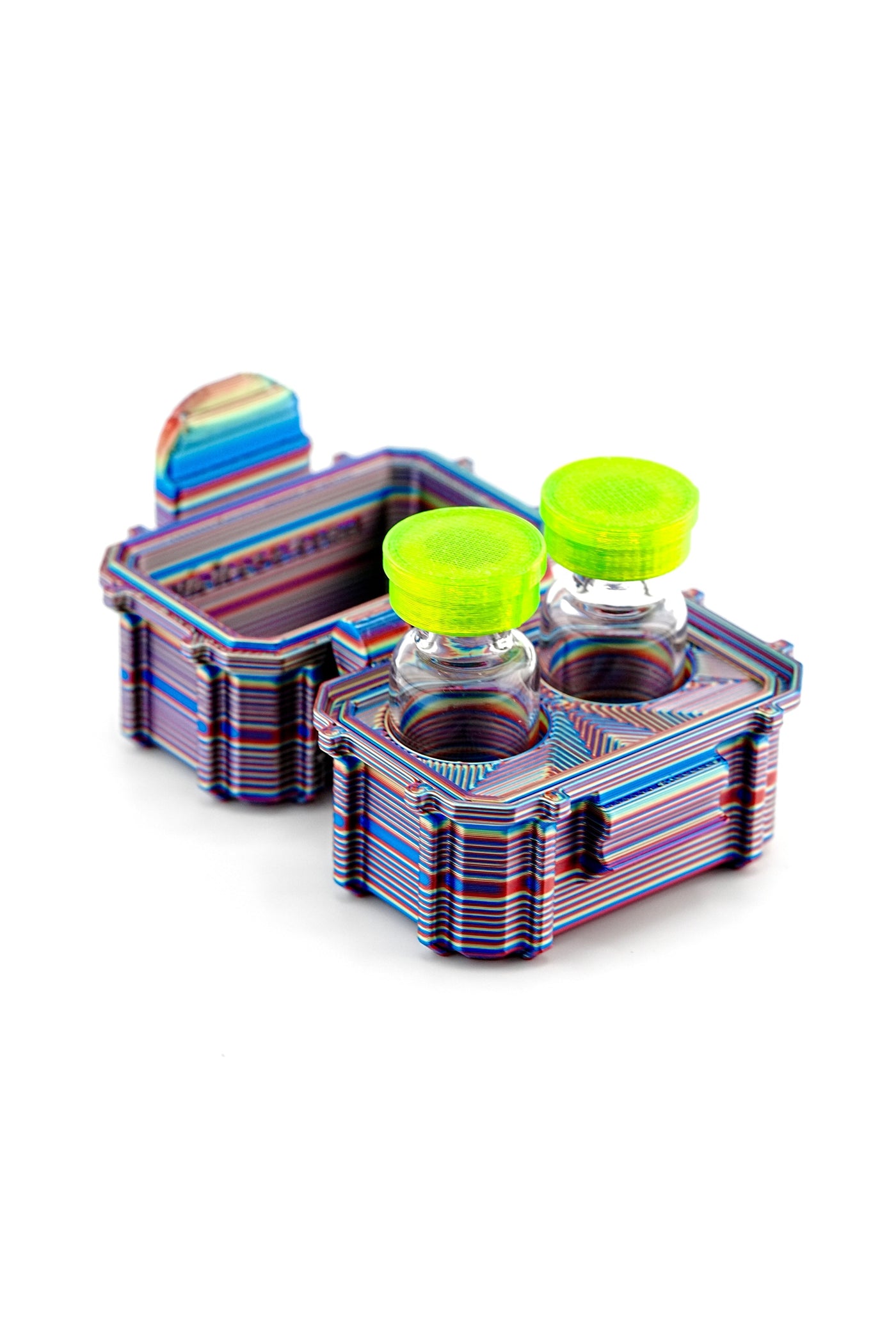
Vialcase produces hard-shell vial cases for GLP-1 pens, peptide vials, BAC water bottles, and reconstitution supplies.


Browse all vial storage cases →
Disclaimer
This article is informational reference only on documented Bay Area travel considerations. It is not medical or legal advice. Refer to manufacturer prescribing information and a licensed healthcare provider for clinical guidance.
Find your perfect case
Hard-shell, dust-free storage for every vial size. Made to order and backed by our 30-day guarantee.
Shop All Cases →