Ozempic® vs Wegovy®: Storage, Travel, Cost, and Pen Differences (2026)
Updated on: 2026-05-08
Table of Contents
🧮 Free dose math reference
The free GLP1 Calculator shows dose timing, titration schedules, and reconstitution math for both semaglutide brand pens and compounded vials.
- What's the same: Both are semaglutide
- FDA-approved indication
- Dose strength and titration schedule
- Pen design: Multi-dose vs single-use
- Storage profile differences
- Travel logistics differences
- Cost and insurance coverage
- Side-effect profile
- Side-by-side reference table
- FAQ
- Disclaimer
1) What's the same: Both are semaglutide
Both Ozempic® and Wegovy® contain semaglutide as the active ingredient, manufactured by Novo Nordisk A/S. Both are once-weekly subcutaneous injections that work as GLP-1 receptor agonists. The pharmacological action is documented as identical: semaglutide binds GLP-1 receptors, slowing gastric emptying, reducing appetite, and improving glycemic control.
The molecule is the same. The difference is in FDA indication, dose strength range, pen design, and packaging — which then cascades into different storage profiles, travel considerations, costs, and insurance coverage.
2) FDA-approved indication
- Ozempic® — FDA-approved for type 2 diabetes in adults. Approved 2017.
- Wegovy® — FDA-approved for chronic weight management in adults with obesity (BMI ≥ 30) or overweight (BMI ≥ 27) with at least one weight-related comorbidity, plus adolescents 12+ with obesity. Approved 2021. Wegovy was also FDA-approved in 2024 for cardiovascular risk reduction in adults with established cardiovascular disease and obesity.
The same molecule (semaglutide) has both indications because the trials that supported Wegovy approval used higher doses and weight-management endpoints. Documented practice in clinical literature is that Wegovy is the labeled choice when weight management is the primary indication.
3) Dose strength and titration schedule
Documented dose strengths and approved titration schedules:
- Ozempic® — doses of 0.25 mg, 0.5 mg, 1 mg, and 2 mg weekly. Titration starts at 0.25 mg for 4 weeks, then 0.5 mg, then optional escalation to 1 mg or 2 mg.
- Wegovy® — doses of 0.25 mg, 0.5 mg, 1 mg, 1.7 mg, and 2.4 mg weekly. Titration starts at 0.25 mg for 4 weeks, escalating monthly to the maintenance 2.4 mg dose.
Wegovy reaches a higher maintenance dose (2.4 mg vs Ozempic's 2 mg max) consistent with its weight-management indication.
4) Pen design: Multi-dose vs single-use
The pen design is the most significant practical difference between the two products:
- Ozempic® — multi-dose pen. Each pen contains multiple weekly doses (typically 4 doses per pen at the maintenance strength). The pen is reused weekly until empty. After first injection, the pen is documented as usable for up to 56 days at room temperature ≤86°F (30°C) or refrigerated.
- Wegovy® — single-use pen. Each pen contains exactly one weekly dose. After delivery, the pen is documented for disposal in a sharps container. Patients receive a 4-pen monthly supply.
The multi-dose vs single-use design has cascading implications for travel (fewer pens to carry for Ozempic), packaging volume (Wegovy ships more pens per month), and sharps disposal frequency (Wegovy generates 4× the sharps volume per month).
5) Storage profile differences
Both share Novo Nordisk's standard refrigeration profile (2–8°C / 36–46°F) before first use. The room-temperature window after use differs:
- Ozempic® — up to 56 days at room temperature (≤86°F / 30°C) after first injection, OR refrigerated through 56 days, whichever comes first. The 56-day window applies to the multi-dose pen across all 4–6 weekly doses it contains.
- Wegovy® — up to 28 days at room temperature (≤86°F / 30°C) before first use. Each single-use pen is used and then discarded; the 28-day window covers room-temperature storage of the unused pen.
Neither product is documented for freezing. Both are documented as kept in original carton for light protection.
6) Travel logistics differences
The pen design difference shapes travel logistics:
- Ozempic® — one pen typically covers 4 weekly doses, so a 14-night trip needs 1 pen plus 1 backup (2 pens total). The 56-day room-temperature window means the in-use pen tolerates an extended trip without needing refrigeration.
- Wegovy® — one pen per weekly dose. A 14-night trip needs 2 pens for the trip plus 1 backup (3 pens). The 28-day room-temperature window applies to unused pens; once injected, the pen is disposed.
For a 30-night cruise: Ozempic needs ~2 pens; Wegovy needs ~5–6 pens. For TSA carry-on, both fall under the same medical-liquids exemption. For documented details on travel, see our Ozempic carry-on reference and Wegovy carry-on reference.
7) Cost and insurance coverage
Documented retail and insurance landscape:
- Ozempic® — retail roughly $1,000–$1,400 per month without insurance. Documented as covered by most commercial insurance plans for type 2 diabetes diagnosis. Medicare Part D covers Ozempic for diabetes.
- Wegovy® — retail roughly $1,300–$1,600 per month without insurance. Documented as having less consistent insurance coverage than Ozempic; many commercial plans exclude weight-management medications. Medicare doesn't cover Wegovy for weight management (statutory exclusion), but began covering Wegovy for cardiovascular indication in 2024.
Novo Nordisk's manufacturer savings cards documented for both products reduce out-of-pocket cost for eligible patients with commercial insurance.
8) Side-effect profile
Documented side-effect profile is similar for both since they're the same molecule. The most commonly documented adverse events in the prescribing information:
- Nausea (most common; documented in ~20–44% of patients depending on dose)
- Vomiting
- Diarrhea or constipation
- Abdominal pain
- Decreased appetite
- Fatigue
- Injection-site reactions
Documented serious adverse events in the boxed warning include risk of thyroid C-cell tumors (based on rodent studies); contraindications include personal or family history of medullary thyroid carcinoma or Multiple Endocrine Neoplasia syndrome type 2.
9) Side-by-side reference table
| Property | Ozempic® | Wegovy® |
|---|---|---|
| Active ingredient | Semaglutide | Semaglutide |
| FDA indication | Type 2 diabetes | Chronic weight management; CV risk reduction |
| Dose strengths | 0.25, 0.5, 1, 2 mg | 0.25, 0.5, 1, 1.7, 2.4 mg |
| Pen design | Multi-dose (4 doses/pen) | Single-use (1 dose/pen) |
| Refrigeration | 2–8°C before first use | 2–8°C before first use |
| Room-temp window | 56 days after first use | 28 days before use |
| Approx retail/month | $1,000–$1,400 | $1,300–$1,600 |
| Medicare coverage | Yes (diabetes) | CV indication only since 2024 |
| Pens for 14-night trip | ~2 pens | ~3 pens |
10) FAQ
Are Ozempic and Wegovy the same medication?
Both contain the same active ingredient, semaglutide, manufactured by Novo Nordisk. They differ in FDA-approved indication (diabetes vs weight management), dose strength range, and pen design (multi-dose vs single-use).
Why does Wegovy reach a higher dose than Ozempic?
Wegovy's clinical trials supported a maintenance dose of 2.4 mg for weight management; Ozempic's diabetes trials capped at 2 mg. The approved labeling reflects each trial's documented maintenance dose.
Can a patient switch between Ozempic and Wegovy?
Some patients are documented as switching based on insurance coverage and indication. The decision is documented in clinical literature as one for the prescribing healthcare provider, considering FDA indication, insurance coverage, and individual response.
Which is better for travel: Ozempic or Wegovy?
Ozempic's multi-dose pen design is documented as more travel-efficient (fewer pens to carry, longer room-temperature window). Wegovy's single-use design means more pens per trip and stricter sharps disposal logistics. The choice is typically driven by FDA indication and insurance coverage rather than travel preference.
How does the storage profile actually differ in real-world use?
Ozempic's 56-day room-temperature window (after first use) gives substantial flexibility for long trips. Wegovy's 28-day room-temperature window applies to unused pens; once injected, each pen is disposed. For a 30-night trip, Ozempic typically needs no active cooling once in use; Wegovy's unused pens are documented as kept refrigerated until the day of use when feasible.
Trademark notice: Ozempic® and Wegovy® are registered trademarks of Novo Nordisk A/S. Vialcase is independent and is not affiliated with, endorsed by, or sponsored by Novo Nordisk. References are descriptive of FDA-approved medications and refer to publicly available manufacturer prescribing information.
Recommended Travel Cases
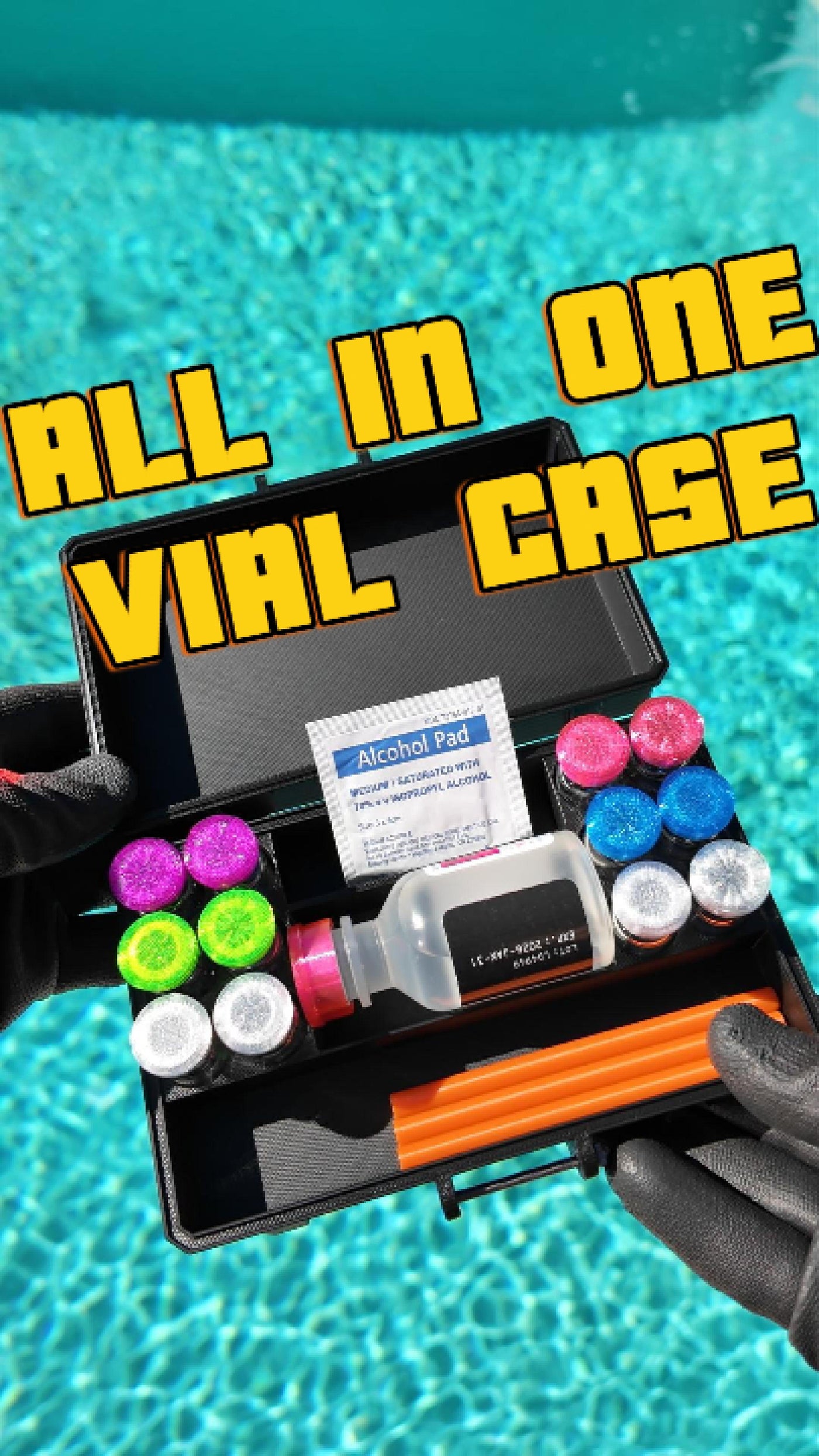
Vialcase produces hard-shell vial cases sized for GLP-1 pens, peptide vials, BAC water bottles, and reconstitution supplies. Three options most commonly referenced for travel:


Browse all vial storage cases →
Disclaimer
This article is informational reference only on documented differences between two FDA-approved semaglutide medications. It is not medical or legal advice and does not direct any specific clinical action. Refer to manufacturer prescribing information and a licensed healthcare provider for clinical guidance specific to either medication, including the question of which may be appropriate for an individual patient.
Find your perfect case
Hard-shell, dust-free storage for every vial size. Made to order and backed by our 30-day guarantee.
Shop All Cases →