What to Do After Buying GLP-1 or Peptides from a Mexican Pharmacy — Safe Storage & Travel Guide
Updated on: 2026-05-22
Table of Contents
- 1. Inspect & verify your purchase
- 2. Proper storage for peptides & GLP-1 after purchase
- 3. Choosing the right storage & travel case
- 4. Transporting your peptides home (flight or drive)
- 5. Recommended VialCase storage options
- 6. FAQ
- 7. Disclaimer
1. Inspect & verify your purchase
After buying peptides or GLP-1 products (such as semaglutide, tirzepatide, CJC-1295, or BAC water) from a Mexican pharmacy, take a moment to inspect:
- Check expiration dates and manufacturer labels.
- Ensure the vial cap seals are intact (no punctures or leaks).
- If you purchased reconstituted products, confirm storage temperature with the pharmacist before leaving.
Keep your receipt and label—it helps if asked about the medication when crossing back into the U.S. for personal use.
2. Proper storage for peptides & GLP-1 after purchase
Once purchased, temperature stability is everything. GLP-1 products (like semaglutide and tirzepatide) and reconstituted peptides typically need refrigeration between 36–46°F (2–8°C).
- Do not freeze: Freezing damages peptide chains and glass vials.
- Keep upright: Store vials vertically to avoid leakage or label wear.
- Dark storage: Avoid sunlight—use an opaque travel case or fridge drawer.
Most dry peptides (unmixed lyophilized powder) can be kept at room temperature in a cool, dry space until reconstitution.
3. Choosing the right storage & travel case
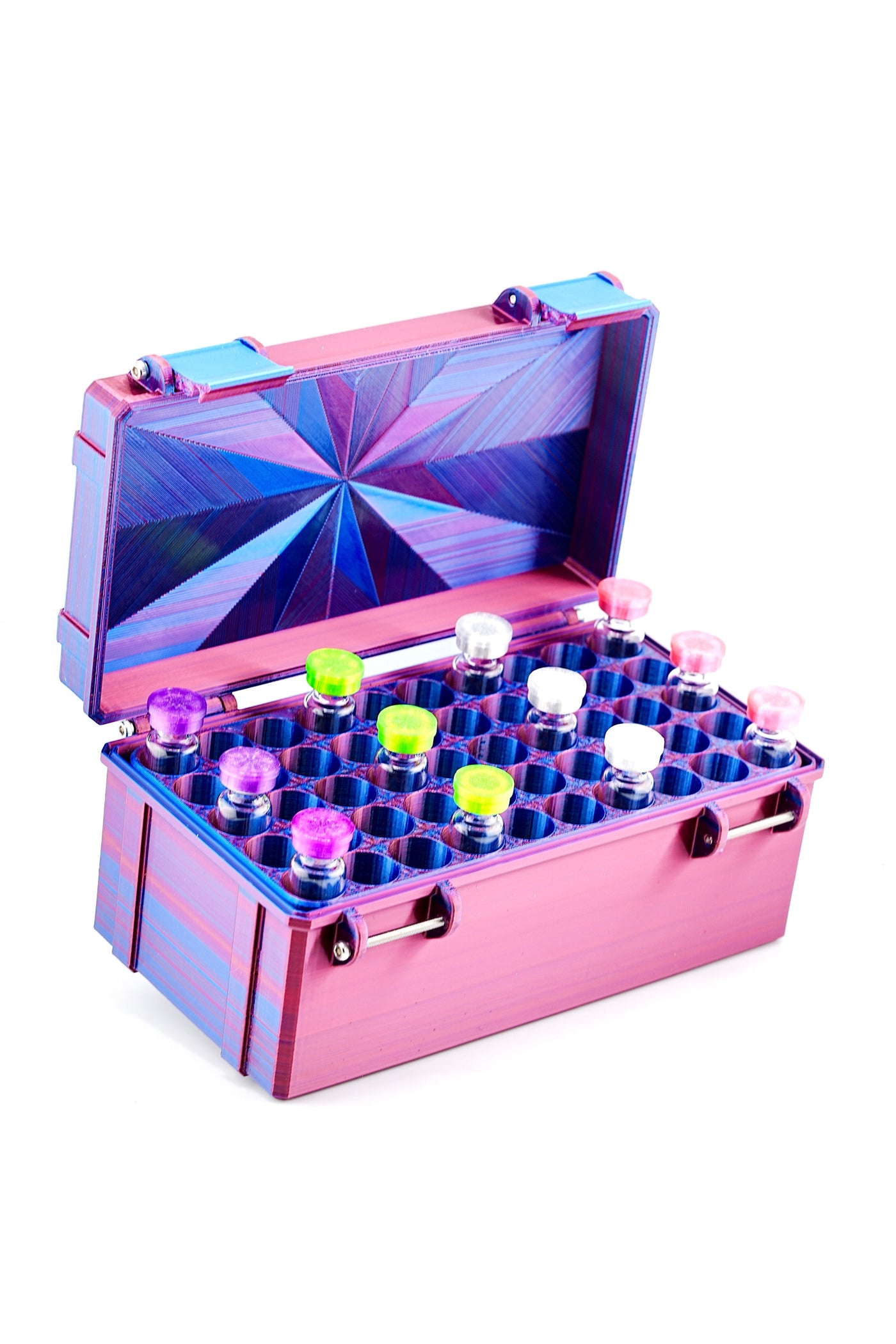
Whether you’re staying in Cabo, Cancún, or Tijuana, a structured storage case prevents loss, leakage, or breakage during your trip. VialCase travel organizers are designed for GLP-1 pens, 3 mL–10 mL vials, BAC bottles, and syringes—keeping everything labeled and stable at travel temperature.
- Short stays: Choose the 4-Slot Peptide & BAC Case.
- Extended trips: Go for a 12-Slot Organizer or larger.
- Custom organization: Add flexible vial caps to color-code compounds.
4. Transporting your peptides home (flight or drive)
If you plan to return home with purchased vials or pens:
- Keep everything in carry-on: Never check medication in luggage.
- Pack in a case with gel packs: Use sealed ice packs to maintain temperature during your trip.
- Label clearly: Original pharmacy label + “medical supplies” note card.
- Declare honestly if asked: “Personal medical use, refrigerated item.”
U.S. Customs typically allows small, personal-use quantities of prescribed or compounded medication when properly labeled and packaged.
5. Recommended VialCase storage options

20-Slot Peptide & Syringe Travel Case — full-capacity organizer for longer storage and international trips.

4-Slot Peptide & BAC Water Case — perfect for carry-on or hotel mini-fridge storage.

12-Slot Peptide Organizer — mid-size home or travel storage; holds vials, BAC water, and syringes neatly.

12×3 mL + 3×10 mL + 1×BAC Case — versatile mix for GLP-1, TRT, and peptide storage.

Flexible Snap-On Vial Caps — protect and color-code vials for clean organization.
6. FAQ
Can I keep peptides from a Mexican pharmacy at room temperature?
Only if the vial is lyophilized (dry powder). Mixed or liquid peptides and GLP-1 pens must be refrigerated at 36–46°F.
What if my hotel fridge is too warm or cold?
Use a case with a thermometer or gel pack to stabilize temperature. Avoid the freezer section.
Can I bring peptides home to the U.S.?
Yes, small personal-use quantities are generally allowed when labeled and declared properly.
How do I organize multiple compounds?
Use color-coded caps and cases with labeled upright slots to separate GLP-1, CJC, or TRT compounds.
7. Disclaimer
This article is for informational and organizational purposes only. It does not provide medical or legal advice. Always verify with your healthcare provider and customs authority before traveling or importing medications.

Practical checklists & organization guides for safe peptide and GLP-1 storage during travel.
Find your perfect case
Hard-shell, dust-free storage for every vial size. Made to order and backed by our 30-day guarantee.
Shop All Cases →