Traveling with BPC-157 Peptides: TSA Rules, Packing Tips & Legal Guidance
Updated on: 2026-05-22
Table of Contents
- TSA Basics for BPC-157 & Injectable Peptides
- How to Pack Peptides & Supplies
- Labeling & Documentation Tips
- Carry-On vs Checked Bag Rules
- Recommended Travel Cases (Real Products)
- Customs & International Return to U.S.
- FAQ
- Disclaimer
TSA Basics for BPC-157 & Injectable Peptides
The Transportation Security Administration (TSA) allows passengers to travel with medically necessary liquids, vials, and syringes in carry-on baggage. BPC-157 peptides—whether lyophilized (powder form) or reconstituted—fall under this medical category when properly labeled and stored.
- Always carry-on injectable medications; never check them in luggage due to temperature and handling risks.
- Declare your supplies when requested, stating: “Medical vials and syringes for personal use.”
- TSA officers may inspect your kit visually but typically do not require removal if items are clean, labeled, and organized.
How to Pack Peptides & Supplies
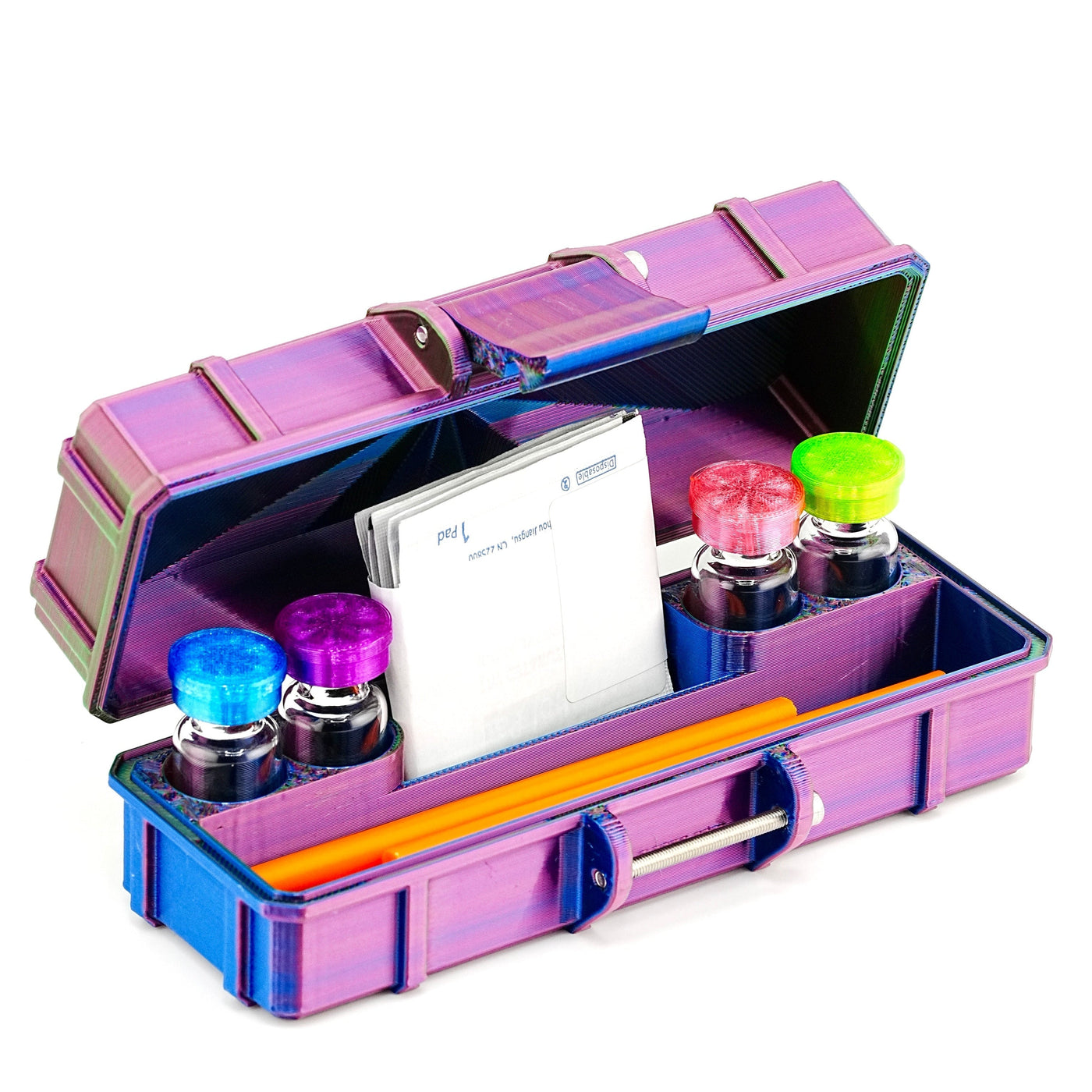
Pack everything in a compact, professional case designed for vials and syringes. This minimizes questions and keeps contents upright and clean.
- Use precision-cut or elastic organizers to keep BPC-157 vials upright (2–10 mL sizes).
- Store BAC water (30 mL) in a separate section, labeled and capped.
- Include alcohol swabs and syringes in a clean divider pocket—never loose.
- Avoid storing any medical items with cosmetics or food.
Shop Peptide Travel Kits Get Protective Vial Caps
Labeling & Documentation Tips
- Original labeling: Keep pharmacy or compounder labels when possible.
- Print simple tags: If vials are blank, label them with “BPC-157 – Peptide Research – Personal Use.”
- Carry documentation: If prescribed, bring a doctor’s note or order sheet showing medical purpose.
- Keep receipts: For products purchased abroad (e.g., Mexico or Europe), receipts demonstrate personal use and authenticity.
Carry-On vs Checked Bag Rules
All peptides and injectables belong in your carry-on, not checked luggage. Checked baggage is subject to pressure changes, temperature swings, and loss risk.
Carry-on:
- Peptide vials (2–10 mL)
- Bacteriostatic water (30 mL bottle)
- Syringes (capped, clean)
- Labels, alcohol pads, and protective caps
Checked bag: Avoid storing any active medical supplies. Only non-sensitive items like spare caps or organizers can go here.
Recommended Travel Cases (Real Products)


Customs & International Return to U.S.
When returning to the United States with BPC-157 or peptides purchased abroad, declare all medications. U.S. Customs and FDA allow personal medical supplies in small, labeled quantities under 21 CFR § 381 (Personal Importation Policy).
- Declare on your customs form and verbally as “personal medical peptides.”
- Keep original or printed labels showing compound name and purpose.
- Bring receipts and proof of personal use (doctor’s note or correspondence if applicable).
- Limit quantity to 90 days’ personal supply.
Be respectful, clear, and organized—agents respond best to neat, well-labeled medical kits. Our cases help maintain that professional presentation at borders and checkpoints.
FAQ
Can I bring reconstituted BPC-157 through TSA?
Yes. Declare it as a medically necessary liquid. TSA agents are trained to handle such cases. Keep the vial sealed, labeled, and stored upright.
Do I need a doctor’s note?
Not always, but it helps—especially for international or prescription-based compounds like GLP-1 analogs.
Can I refrigerate peptides on the plane?
Not typically. Use an insulated pouch if needed. Avoid freezing or direct ice contact.
What if TSA inspects my case?
Stay calm, explain briefly (“medical vials for personal use”), and show labels. Clean and professional organization usually resolves any inspection quickly.
Disclaimer
This content is for informational and organizational purposes only. It does not provide medical or legal advice. Always follow your healthcare provider’s and official TSA and U.S. Customs guidance. All VialCase products are intended for lawful personal storage and transport of medical supplies.

Nick Belor shares hands-on travel organization tips for storing and transporting peptides and injectables safely and legally.
The same setup we use for cruise, flight, and customs travel. Hard-shell vial case + temperature-logged inner case + Amazon-Prime cooler — built to survive 48 hours of transit at 2–8 °C.
Find your perfect case
Hard-shell, dust-free storage for every vial size. Made to order and backed by our 30-day guarantee.
Shop All Cases →