Declaring Peptides or GLP-1 at U.S. Customs
Declaring Peptides or GLP-1 at U.S. Customs
When returning to the United States with medication purchased abroad — including GLP-1 injectables (such as semaglutide or tirzepatide) or compounded peptides — you must follow U.S. Customs and FDA guidelines for personal-use importation.
- Declare all medications: On your customs form (Form 6059B), check “Yes” for items to declare and verbally state “personal medical supplies.”
- Keep everything labeled: Original pharmacy labels showing your name, the compound name, and dosage are key. Bring receipts if available.
- Quantity limit: Bring only what is reasonable for personal use (typically up to a 90-day supply).
- No resale or commercial intent: U.S. law allows import only for personal therapy or physician-directed treatment.
- Physician documentation helps: If available, carry a prescription copy or letter indicating medical need — especially for GLP-1 analogs.
U.S. Customs and Border Protection (CBP) and the Food and Drug Administration (FDA) generally permit travelers to enter with small, clearly labeled quantities of medication for personal use. However, agents have discretion to inspect or deny entry for unlabeled or suspicious products.
When in doubt, be polite and transparent — clear labeling and organized storage in your travel case make the process faster and more professional.
Legal Note
According to the FDA’s Personal Importation Policy (21 CFR § 381) and CBP traveler guidelines (updated 2024), individuals may bring medication for personal therapeutic use into the U.S. in small quantities, provided the product is not for resale, properly declared, and clearly identified.
Customs Declaration Example
At re-entry, simply state:
“I have prescription peptide vials and GLP-1 medication for personal medical use. They are properly labeled and stored.”
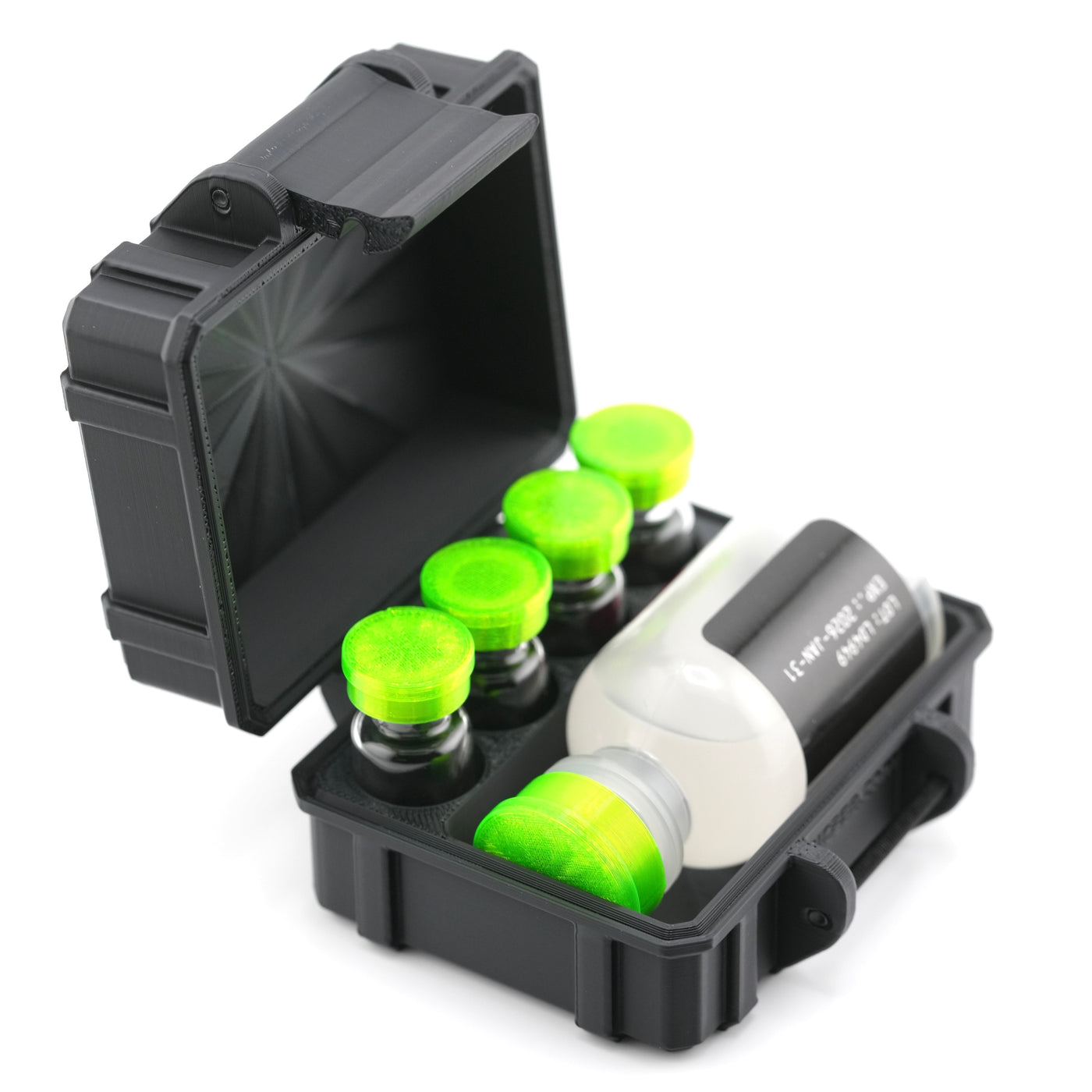
Agents may ask to inspect the vials. If everything is labeled, clean, and packed in a professional medical organizer like a VialCase travel kit, most travelers report no issues.
Find your perfect case
Hard-shell, dust-free storage for every vial size. Made to order and backed by our 30-day guarantee.
Shop All Cases →