
Vial cap essentials for secure seals and clean handling
Updated on: 2026-05-22
Table of Contents
- Why the Right Vial Cap Matters for Secure Vial Closure
- Core Use Cases for a Vial Cap in Labs and Manufacturing
- How a Vial Lid, Stopper, and Seal Work Together
- Did You Know? Facts about Vial Cap Performance
- Comparison: Pros & Cons of Crimp, Snap, and Screw Vial Caps
- Buyer’s Checklist for a Vial Cap and Vial Closure Fit
- Final Thoughts & Advice on Choosing a Vial Cap
- Vial Cap Q&A: Quick Answers
Why the Right Vial Cap Matters for Secure Vial Closure
The vial cap is a small part with big impact. It safeguards sample integrity, helps you avoid spills, and supports consistent analysis. When a vial cap is matched to the right vial closure and liner system, you reduce rework, protect instruments, and keep teams moving. Whether you call it a vial cap, vial lid, or simply a closure, your choice affects uptime and data quality. In the first 100 samples or the next 10,000, the right fit minimizes waste and supports reliable handling from bench to shipment.
A well-chosen vial cap also supports your sealing method, including crimp, snap, and screw formats. It works with a compatible vial stopper and vial seal to deliver a tight barrier. With a dialed-in cap and liner material, you improve compatibility with organic solvents, aqueous solutions, and headspace conditions. The result is a smoother day in the lab and fewer surprises in storage or transit.
Core Use Cases for a Vial Cap in Labs and Manufacturing
- R&D and QC sample storage where tight vial closure reduces evaporation and contamination.
- Autosampler workflows that require repeatable pierceability and reseal performance.
- Stability and retention studies where cap and septa materials must resist target solvents.
- Transport and archiving where a secure vial seal avoids leaks and label damage.
Customer feedback illustrates the difference:
“Switching to screw formats with PTFE/silicone liners cut our rework. Caps thread cleanly, and the seal holds through multiple piercings.” — Lab Supervisor, analytical services
“We standardized on 20 mm aluminum crimp styles with flip-off seals for clear tamper evidence. Handling is faster and audit-ready.” — Process Tech, manufacturing support
How a Vial Lid, Stopper, and Seal Work Together
Think of the vial lid as the top component that secures the liner or septa against the vial finish. Together with a compatible vial stopper and a tight vial seal, the system creates a controlled barrier. The cap applies the right pressure, the liner or septa provides chemical resistance and pierceability, and the closure type (crimp, snap, or screw) stabilizes the assembly. When any part is mismatched—size, thread, or material—you risk leaks, coring, or instrument carryover. Getting the combination right is the easiest way to boost consistency.
Did You Know? Facts about Vial Cap Performance
- Seal strength is influenced as much by liner material and thickness as by cap format.
- PTFE-faced silicone septa balance chemical resistance with clean needle penetration.
- Crimp formats allow very firm engagement between cap, septa, and vial finish for transport security.
- Thread quality on a screw vial cap affects torque repeatability and reseal performance.
- Flip-off seals provide quick visual confirmation that a crimped vial has not been opened.
Comparison: Pros & Cons of Crimp, Snap, and Screw Vial Caps
Crimp Vial Cap
- Pros: Very secure vial closure; excellent for transport; tamper-evident options; stable over longer storage intervals.
- Cons: Requires a crimping tool; slightly slower changeover; technique-sensitive for optimal seal.
- Best for: Shipping, archiving, and applications where the strongest mechanical seal is preferred.
Consider 20 mm aluminum crimp vial caps with flip-off seals for clear tamper evidence and robust handling. These caps give operators a fast visual check while maintaining a tight seal around the stopper and septa.
Screw Vial Cap
- Pros: Tool-free installation; quick changeover; easy torque control; great for autosamplers.
- Cons: Slightly less tamper-evident without added bands; thread quality matters for consistency.
- Best for: Routine HPLC/GC workflows, high-throughput labs, and teams that value speed.
For a reliable, instrument-ready option, 9-425 screw thread autosampler vial caps with PTFE/silicone septa provide clean pierceability and a dependable reseal. These are a strong match for solvent exposure and repeat storage.
Snap Vial Cap
- Pros: Fast application; no tools; easy to remove for rapid access.
- Cons: Not as secure as crimp; reseal performance varies by design; not ideal for shipping.
- Best for: Short-term storage, quick bench work, and workflows that need fast access.
How do I choose between crimp, snap, and screw vial caps?
If you handle frequent instrument runs and need speed, screw is the practical choice. If you require the highest mechanical security or clear tamper evidence, crimp stands out. If you need fast, short-term access, snap works well. Also consider liner materials: PTFE/silicone for broad solvent compatibility; butyl for strong reseal; and specialized blends where specific resistance or low background is needed.
Buyer’s Checklist for a Vial Cap and Vial Closure Fit
- Confirm vial finish and size: Match 13 mm, 20 mm, or 9-425 threads to your cap format. Verify manufacturer specs for OD/ID and thread pitch.
- Choose the closure type: Crimp for security, screw for speed, snap for quick access.
- Select liner/septa materials: PTFE/silicone for broad compatibility; options vary by solvent and temperature exposure.
- Plan for piercings: If using autosamplers, pick septa known for clean puncture and reseal. Avoid coring with appropriate hardness.
- Check tamper evidence: Flip-off seals and bands help you monitor vial condition at a glance.
- Assess torque or crimp settings: Follow device guidelines to avoid under- or over-sealing.
- Review pack sizes and reorder cadence: Stock enough to avoid mid-run substitutions.
- Validate with a pilot run: Test the chosen vial cap with your actual solvents, temperature range, and instruments.
Quick steps to select a vial cap
- Measure your vial finish and confirm the cap format (crimp, snap, screw).
- Pick a liner/septa that matches your solvent and piercing needs.
- Decide on tamper-evident features if you ship or archive samples.
- Run a short test to confirm seal integrity and autosampler performance.
Ready to compare options? Explore the vial caps collection for sizes, formats, and liners that align with the checklist above. If you want a secure, tamper-evident crimp style, review 20 mm aluminum crimp caps. If you need autosampler-ready speed, see 9-425 screw thread caps. For general questions or to confirm compatibility, visit VialCase.
Final Thoughts & Advice on Choosing a Vial Cap
Focus on the fit between cap, liner, and vial. That alignment drives seal integrity and smooth handling. The right vial cap can help you protect samples, reduce cleanups, and keep results consistent. Crimp delivers top security, screw delivers speed, and snap delivers access. Pair the format with the right septa and confirm with a small test before committing to a full buy.
Next actions:
- Shortlist one crimp and one screw option that match your vial size and liner needs.
- Order a small pack and verify torque or crimp settings on your bench.
- Standardize on the combination that seals tight and runs clean in your system.
Note: Always follow your standard operating procedures and applicable handling and disposal guidelines. This article does not provide medical or treatment advice.
Vial Cap Q&A: Quick Answers
How do I choose between crimp, snap, and screw vial caps?
Start with your workflow. If you need the strongest mechanical seal and tamper evidence, choose a crimp vial cap. If you run frequent instrument storage and want fast, tool-free changes, a screw vial cap is practical. For short bench work that needs rapid access, a snap vial cap works. Confirm the liner or septa material to match your solvent and piercing needs, then test the combination with your vial closure for seal integrity.
Are vial caps and septa reusable or single-use?
Many teams treat vial caps and septa as single-use to maintain consistency. Some screw caps with robust PTFE/silicone septa can tolerate limited reuse in certain workflows, but performance may vary after punctures or exposure. If you consider reuse, validate with your solvents, needle sizes, and number of piercings. When in doubt, choose single-use to avoid variability.
What is the difference between a vial seal, vial stopper, and vial lid?
The vial lid (cap) is the outer component that secures the liner or septa against the vial finish. The vial stopper is the elastomer component inside the system that provides the compressible barrier. The vial seal refers to the overall integrity achieved by the cap, stopper or septa, and the closure type working together.
How do I confirm the right size and fit for my vial closure?
Check your vial’s finish and dimensions and match them to the cap format. For screw caps, verify thread type (e.g., 9-425). For crimp caps, verify crown size (e.g., 20 mm). If you are unsure, request a small trial pack and run a leak and autosampler test with your actual method.

Elena Voss is an engineer and stylist passionate about designing functional yet stylish solutions for modern laboratories. With a background in engineering and product design, she brings creativity and precision together to make lab storage not only reliable but also visually appealing. Elena contributes expert insights and styling tips to help users maximize efficiency while maintaining a professional aesthetic.
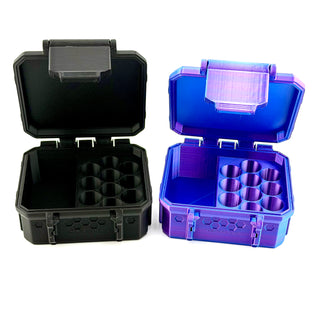
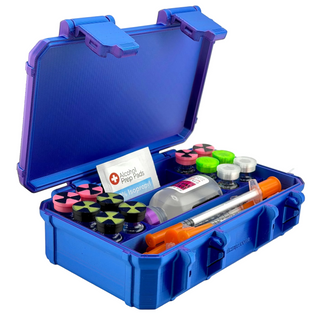
Find your perfect case
Hard-shell, dust-free storage for every vial size. Made in the USA and backed by our 30-day guarantee.
Shop 3 mL Vial Cases →