
Questions to Ask Before Buying a Vial Storage Case
Updated on: 2026-05-22
Table of Contents
- Why a vial storage case elevates sample control
- Did You Know? Fast facts about vial storage cases
- Comparison: vial storage case pros & cons
- Buyer’s checklist for the right vial storage case
- Final thoughts and advice on your vial storage case
- Questions about choosing a vial storage case
- Use cases: how teams rely on a lab vial organizer
- Why a vial storage case with foam insert prevents damage
- Size guide: vial storage case for 2ml vials
- How to label and organize vials inside a storage case
- Care and maintenance to extend case lifespan
- What size vials fit in a standard vial storage case?
- How do I label and organize vials inside a storage case?
- How do I choose a vial case for fieldwork or travel?
Why a vial storage case elevates sample control
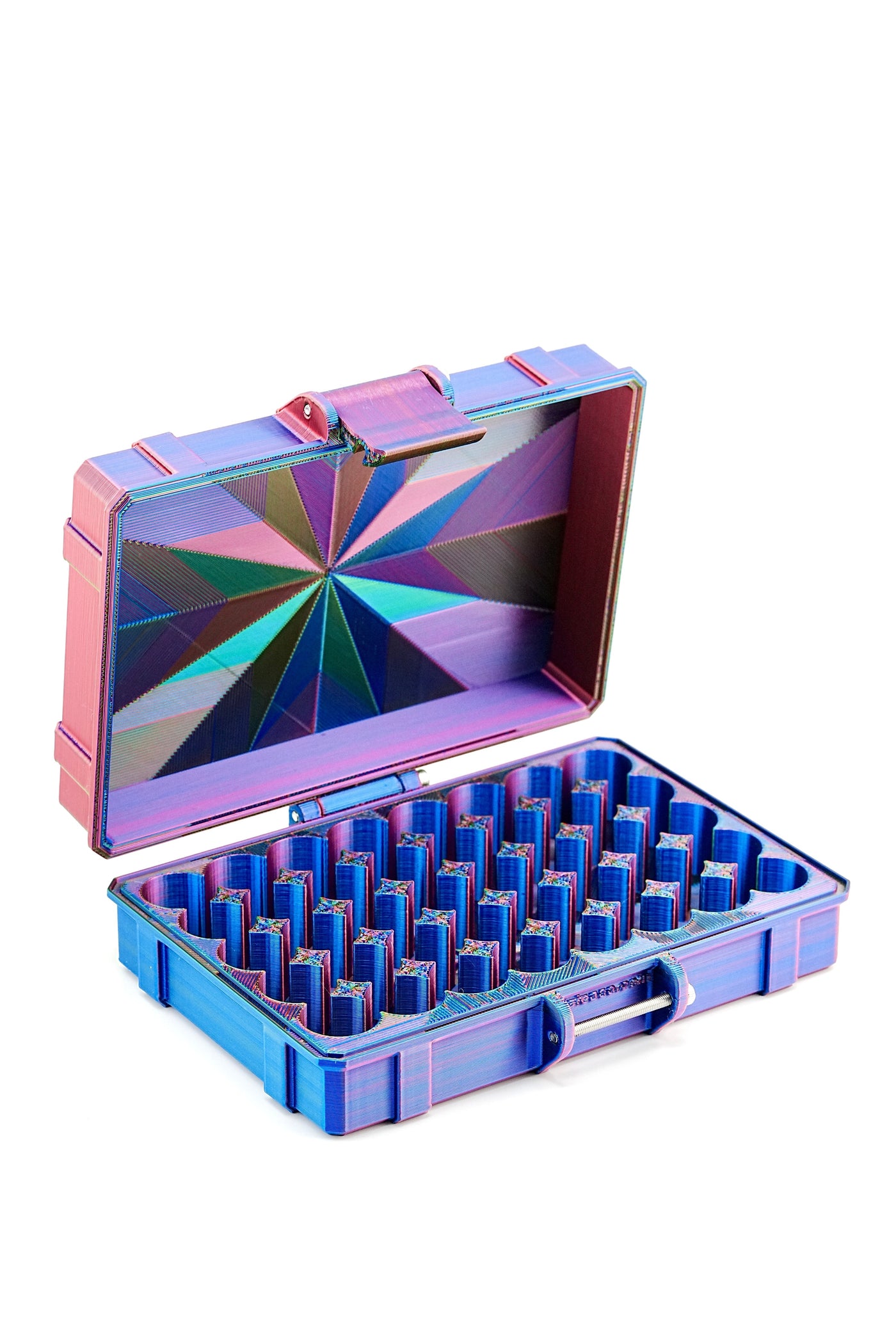
A vial storage case is more than a container. It is a system that keeps your inventory visible, protected, and ready to move. Whether you manage a growing sample library or shuttle a few critical vials to a client site, the right vial case gives you a predictable workflow. You get rapid access, clear labeling, and durable protection for common vial sizes.
Teams often start with a mixed set of trays and a generic vial storage box. Over time, labels fade, foam wears out, and lids crack. A purpose-built sample vial holder solves these issues with a tougher shell, a fitted foam insert, and a grid that holds vials upright and indexed. The result is simple: less time searching, more confidence in every handoff and shipment.
Use cases: how teams rely on a lab vial organizer
- Benchtop readiness: Keep your most-used vials organized in a case that opens flat and stays put, so you can move through tasks without reaching across clutter.
- Field sampling: Protect vials from shock and dust during site visits. Lockable latches and a sealing lid keep samples stable in transit.
- Cold storage rotation: Move sets in and out of cold rooms with a durable handle and foam that tolerates low temperatures. Indexing ensures you return each vial to the same slot.
- Client shipments: Use a consistent case and label scheme to reduce handover friction and speed up verification when samples arrive.
Ready to see options? Compare formats and capacities here: Shop vial cases.
Why a vial storage case with foam insert prevents damage
A fitted foam insert cradles each vial so it can’t rattle, scratch, or tip. High-density foam holds shape under daily use. It absorbs shock in transit, while a smooth finish avoids abrasion around labels or caps. If you’ve ever opened a basic box to find vials shifted or caps loosened, you’ll appreciate foam that is precision-cut for your vial diameter and height.
Some inserts include pre-numbered wells so you can log sample IDs in a sheet or app that mirrors the layout. Others use alphanumeric rows and columns (A1, B3) for fast cross-reference. Either approach reduces errors and speeds audits.
Size guide: vial storage case for 2ml vials
Many labs standardize on 2ml vials. Look for a vial storage case for 2ml vials that supports the specific outer diameter you use (often about 12 mm). The foam well height should support the shoulder of the vial without stressing the cap. If you mix sizes, consider a modular insert with zones cut for 1.5 ml, 2 ml, and 4 ml vials, or choose interchangeable foam trays that swap in seconds.
If you handle wide-mouth vials or specialty caps, check the lid clearance. A domed lid or deep foam recess prevents contact with closures, which reduces the risk of loosening during transport.
Did You Know? Fast facts about vial storage cases
- A case with a gasketed lid helps keep dust and splashes out, and it limits odors from escaping your storage area.
- High-contrast, pre-cut foam improves scan speed when you use color dot labels or QR codes on caps.
- Indexing your lab vial organizer by row and column can cut retrieval time significantly versus random storage.
- Many teams dedicate one case per project. This reduces cross-project mix-ups and simplifies audits.
- A clear-lid vial storage box is great for quick checks, while an opaque lid protects labels from UV exposure.
Comparison: vial storage case pros & cons
Rigid polymer case vs. basic plastic box
- Rigid polymer case – Pros: durable shell, secure latches, carry handle; Cons: slightly heavier.
- Basic plastic vial storage box – Pros: lightweight, low cost; Cons: weaker hinges, less impact resistance.
Foam insert vs. grid divider
- Foam insert – Pros: best shock protection, customizable wells, quiet in transit; Cons: needs replacement over long-term heavy use.
- Grid divider – Pros: fixed slots, easy cleaning, no foam to replace; Cons: less cushioning, can allow rattling.
Clear lid vs. opaque lid
- Clear lid – Pros: instant visual count, fast verification; Cons: less UV protection for labels and contents.
- Opaque lid – Pros: protects labels from light, looks cleaner in public-facing settings; Cons: requires opening to verify contents.
Lockable latches vs. standard latches
- Lockable – Pros: added tamper resistance during transport; Cons: may require small padlock or tie.
- Standard – Pros: quick access; Cons: not ideal for chain-of-custody or shared environments.
Want a side-by-side spec overview? Browse the current lineup here: Compare vial storage cases.
Buyer’s checklist for the right vial storage case
- Capacity you need now and later: Count current vials and add growth. A case that’s 20–30% larger than today’s need gives room to scale.
- Exact vial diameter and height: Verify OD and cap style. A snug fit prevents wobble and protects labels.
- Insert style: Choose a vial storage case with foam insert for transport and mixed environments. Select rigid grids for easy cleaning and routine bench use.
- Lid clearance and seal: Ensure caps won’t rub the lid. Consider a gasket if you work in dusty areas.
- Labeling surfaces: Smooth, writable areas on the lid or spine make indexing and scanning faster.
- Carry handle and hinges: Look for a reinforced handle and metal-pin hinges for frequent travel.
- Stackability: Flat lids and anti-slip feet help you stack multiple cases safely.
- Temperature and chemical tolerance: Choose materials that handle your cleaning routine and storage conditions.
- Replacement inserts: Check availability of spare foams or trays to extend the life of the case.
- Documentation support: A printed grid or downloadable template makes inventory mapping simple.
Need a dedicated option for small sample sets? See a compact favorite here: 2ml vial storage case.
How to label and organize vials inside a storage case
Keep it simple and consistent. Use a permanent marker or solvent-resistant labels for sidewall IDs, and color dots on caps for fast visual sorting. Assign each slot a code that matches your digital sheet. Place the sheet in the lid or store it in your LIMS with the case ID. If you carry two cases to the same site, use distinct color schemes to avoid mix-ups.
Care and maintenance to extend case lifespan
- Wipe down the exterior weekly with a mild, compatible cleaner; avoid harsh solvents that can stress plastic.
- Inspect latches and hinges monthly. Tighten screws if present and check for play.
- Replace foam when you notice compression set, tears, or residue that won’t clean off.
- Keep away from direct heat sources, which can warp thin lids or degrade adhesives on labels.
If you need guidance on care routines or insert replacements, reach out here: Contact us.
Final thoughts and advice on your vial storage case
Choosing the right vial storage case pays off every day. You protect what matters, speed up your workflow, and keep documentation neat. Start by matching your vial sizes, then pick an insert that fits your transport needs. Add clear labeling rules, and your team can find any sample in seconds.
If your setup is growing, consider buying identical cases in batches. Uniform hardware reduces training time and makes audits easier. Most teams see the best results when they assign one case per project, lock in a fixed index, and stick to the same color scheme across all labels. With that foundation, even a busy bench looks calm and controlled.
When you are ready to optimize your setup, explore cases by capacity, insert type, and use case. You can compare formats and confirm fit for 2ml vials and other sizes in one place. Your next well-organized day starts with the right case.
Questions about choosing a vial storage case
What size vials fit in a standard vial storage case?
Most standard cases support common diameters used for 1.5 ml and 2 ml vials. Check the inner diameter of the foam wells or grid slots to confirm compatibility with your vial’s outer diameter and cap height. If you use mixed sizes, look for modular inserts or order a case with a custom-cut foam insert that groups sizes by row for quick identification.
How do I label and organize vials inside a storage case?
Use a two-part system: a durable side label with the sample ID, and a color dot or QR on the cap for fast sorting. Mirror the case layout in a simple sheet with row-and-column indexing (for example, A1–D10). Store the sheet in the lid and in your digital records using the case ID. Keep a short legend for color codes inside the lid so anyone on the team can interpret it at a glance.
How do I choose a vial case for fieldwork or travel?
Prioritize a rigid shell, secure latches, and a gasketed lid. A vial storage case with foam insert absorbs shock during transit and keeps caps from rubbing the lid. Pick a carry handle that fits your grip and a hinge design rated for frequent opening and closing. If you need tamper resistance, choose lockable latches and add a simple seal or padlock during transport.

Nick Belor is a vial storage expert with years of experience in laboratory practices, safe handling, and vial protection systems. As a enginner for VialGuard, he shares practical tips and guides to help researchers, healthcare professionals, and everyday users store and transport vials securely.
The content in this blog post is intended for general information purposes only. It should not be considered as professional, medical, or legal advice. For specific guidance related to your situation, please consult a qualified professional. The store does not assume responsibility for any decisions made based on this information.
Find your perfect case
Hard-shell, dust-free storage for every vial size. Made in the USA and backed by our 30-day guarantee.
Shop 3 mL Vial Cases →